A mesh number alone is not a complete sodium bicarbonate particle-size specification. State the sieve standard, aperture, required passing or retained percentage, and test method. For laser diffraction, identify the distribution basis and limits. Do not substitute Dv50 for a sieve-passing limit.
1. What should a mesh requirement include?
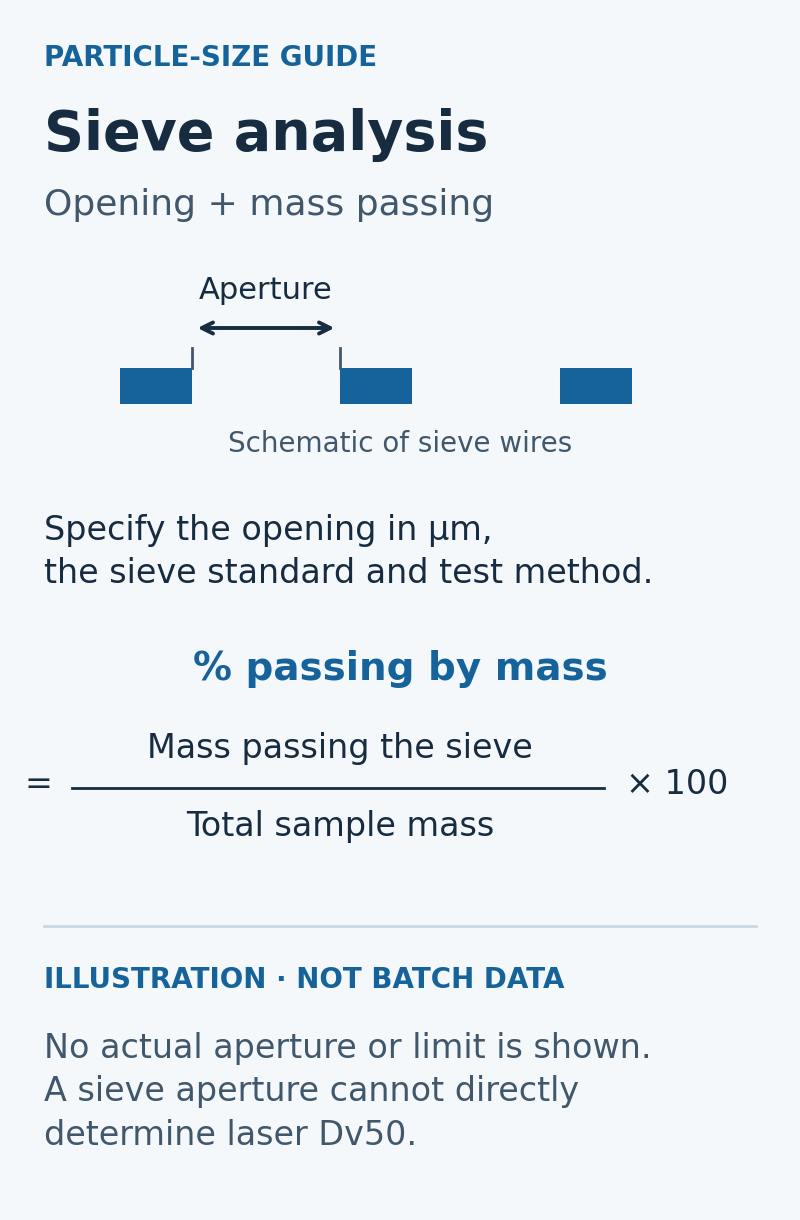
Mesh designations identify sieves; aperture describes the opening in micrometres. ASTM E11 covers woven-wire test sieves, not a sodium-bicarbonate product specification. Request the aperture and applicable standard rather than relying on an informal mesh label. [S1]
A minus sign commonly means passing; a plus sign means retained. Specify the acceptance percentage explicitly. [S2]
For example: at least X% by mass passing a Y µm sieve using the agreed method. X and Y are placeholders, not Bergano guarantees.
2. Is Dv50 the same as mesh size?
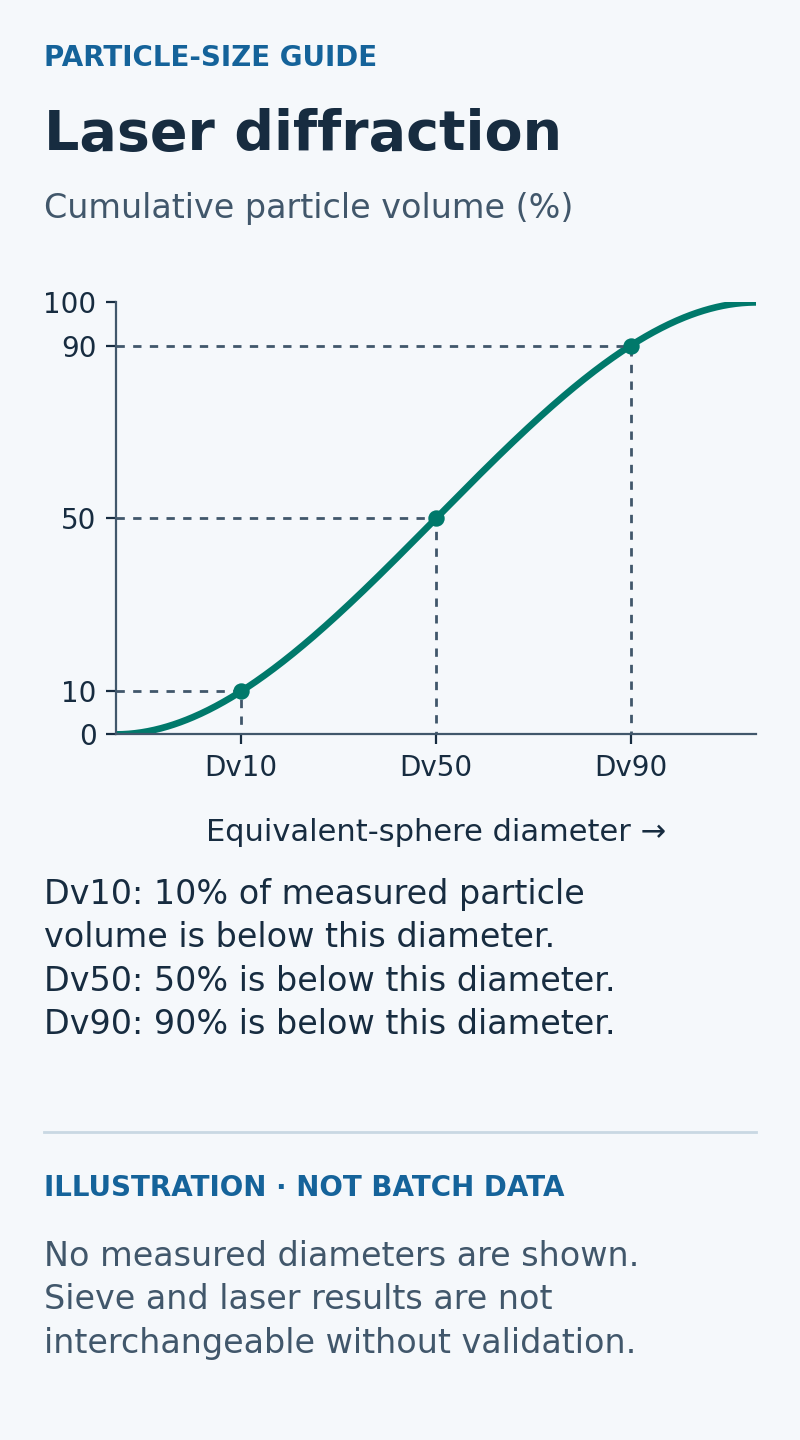
No. Dv50 is the median of a volume-weighted distribution: half the measured particle volume lies below that diameter. It is neither maximum size nor the size of every particle. A report saying only D50 should identify its basis. [S3]
Sieving generally reports mass fractions passing openings; laser diffraction reports volume-weighted equivalent-sphere sizes. Shape and measurement conditions can make results differ. A mesh label cannot directly yield Dv50. [S4]
3. How should buyers compare reports?
Compare results against the agreed acceptance method and limits. Do not assume different methods are interchangeable; a method transfer needs validation. Compare specified sieve percentages or laser percentiles and conditions, not just the median. Dv10, Dv50 and Dv90 describe different points in the distribution; the median alone does not describe the fine and coarse tails. [S5]
Sodium bicarbonate dissolves in water, so the dispersion method must avoid changing the particles during measurement. Ask the laboratory to document its validated dry-dispersion method or suitable liquid dispersant, and confirm that the sample remains stable. [S6] [S7]
Keep grade and batch identity alongside the results. Qualify a replacement through your application trials rather than choosing it only because its mesh label looks similar.
Regular products and fine powder
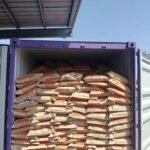
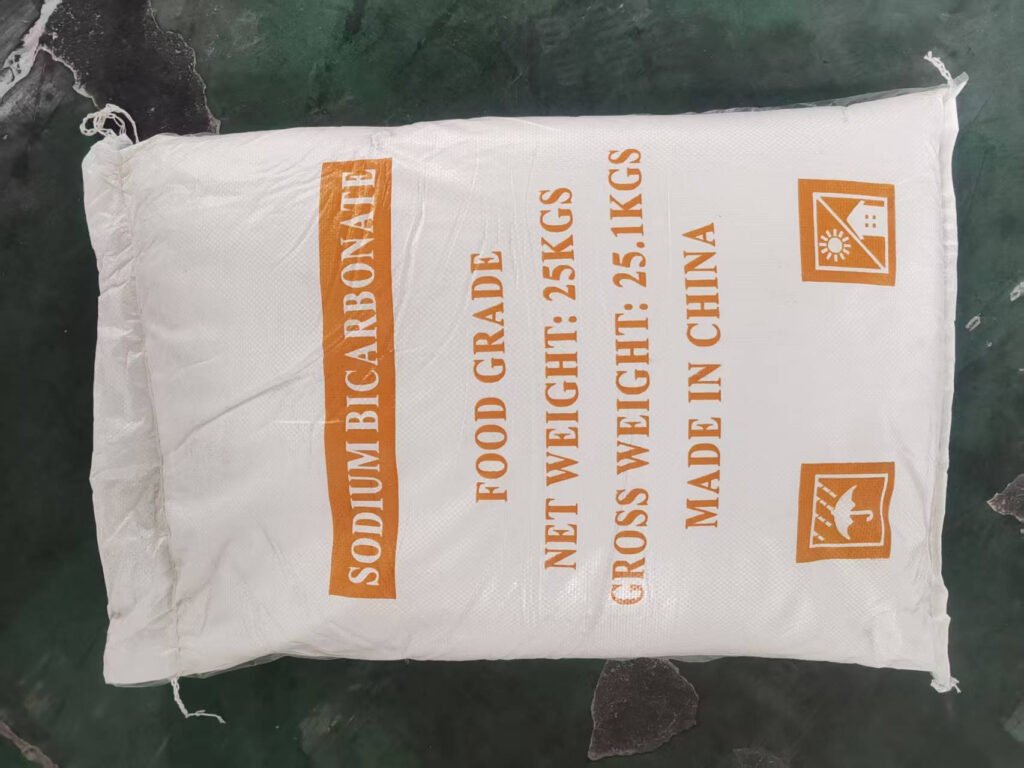
Regular-production sodium bicarbonate is generally 80–120 mesh. Fine powder generally has mesh numbers above 300 and is mainly used for flue-gas desulfurization. It is a specialty product that cakes easily; discuss packaging and storage requirements in advance.
4. Can Bergano arrange a custom particle-size option?
For requirements outside regular supply, Bergano can discuss particle-size customization with a manufacturing partner. This is a special-order option, subject to technical feasibility and separate quotation, rather than a standard specification for every grade. Customization can cost substantially more than regular supply. Start with the particle-size limits and test method your process actually needs, then compare the confirmed option with your application requirements and budget.
5. What should I send with my inquiry?
- Grade and application.
- Sieve standard and apertures with passing/retained limits by mass, OR laser percentiles, units and volume basis.
- Acceptance method and relevant preparation/dispersion conditions.
- Approved specification or anonymized reference result, if available.
- Quantity, packaging, destination and required shipment window.
Request a particle-size review
Send your application and acceptance requirements so a regular or custom supply option can be assessed before ordering.