If your customer asks for a halal or kosher certificate for sodium bicarbonate, request the current document that covers the food-grade material in the supplier’s offer. Match the product, production site, validity dates and label before you approve the source. Repeat those checks before you approve a switch in plant, packer or brand, even when the sodium bicarbonate specification stays the same.
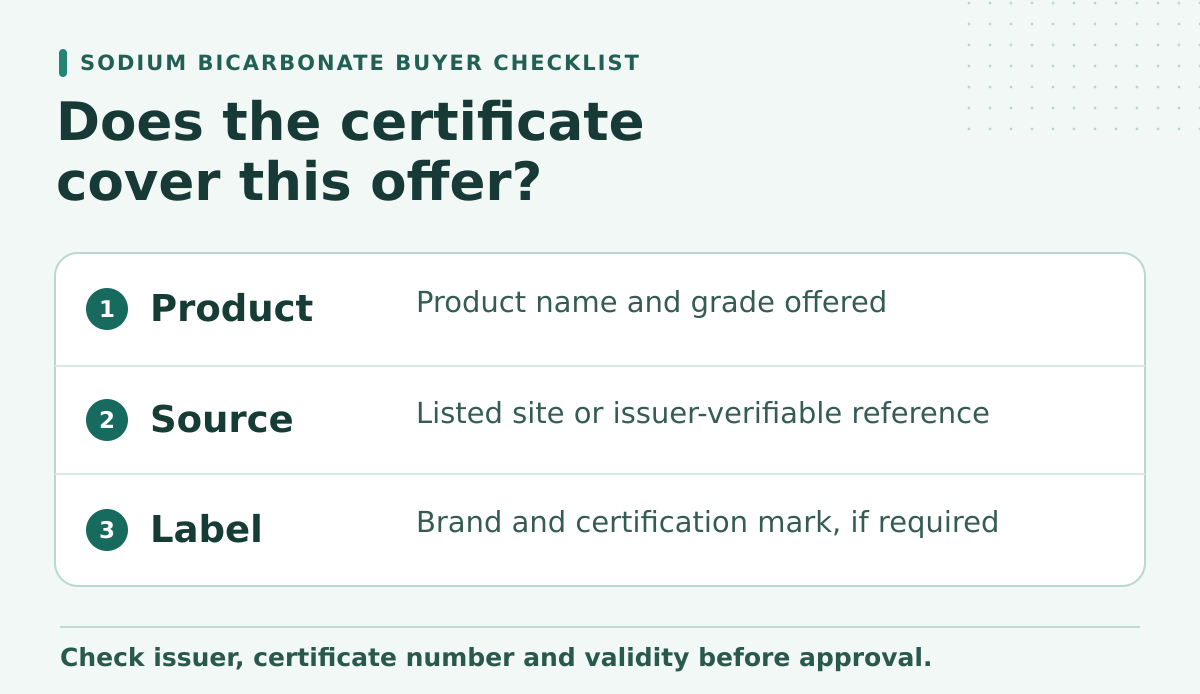
Four checks before approving the offer
- Match the offered product. Find sodium bicarbonate on the certificate or its product schedule. Match the listed product name or code to the supplier’s offer and food-grade specification. If the names differ, ask for a written cross-reference before approval.
- Match the production site. Check the listed facility or issuer-authorized site reference against the site proposed for your order. If another facility will repack the material, ask the issuer whether the proposed repacking arrangement is covered. For a certificate that uses a confidential site code, ask the supplier to arrange confirmation through the issuer.
- Verify the issuer and dates. Ask for the certificate and its product schedule together. Check the reference number and validity with the issuing body; confirm that the document covers the date required by your QA team. For Malaysia-bound orders, use JAKIM’s list of recognized foreign halal certification bodies to check issuer recognition for that market. The list identifies recognized issuers, not the scope of your product or lot. Verify the exact certificate and product schedule with the issuer. For OU-certified products, use the OU Letter of Certification lookup. For other issuers, use their own verification channel and check that your customer or destination accepts the issuer.
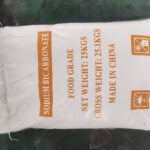
- Match the label you will receive. Request a bag photo or proposed artwork showing the product name, brand or distributor and any certification mark. For private-label bags, clear the brand and mark with the issuer before printing. OU’s private-label guidance separates private-label letters from standard manufacturer letters and addresses changes in production site.
What to do when a supplier changes the plant or bag
Say your supplier offers the same food-grade specification in 25 kg bags, but switches to a second plant and prints your brand on the bag. Ask for the certificate or issuer confirmation covering the new site, plus confirmation for the proposed label. Review both before approving the substitution or printing bags. Keep the approved certificate, product specification and label together in your supplier file. At receipt, match the bag’s lot number to the batch COA. The COA records batch test results; the halal or kosher document answers the separate question of certification coverage.
Send the certificate requirement with your inquiry
When you contact Bergano about food-grade sodium bicarbonate, include the destination market and intended use, required certificate and any issuer or mark your customer specifies, food-grade specification, quantity, and bag size and branding. Request the current certificate and product schedule for the proposed material, together with the proposed bag label, for your QA team to review before ordering.